

Beyond GLP-1
Root-Cause Metabolic Support Through Herbal Medicine and lifestyle changes
The conversation around weight loss is changing.
More people are asking better questions:
How do we support metabolism without suppressing appetite?
How do we stabilize blood sugar without overriding the body?
How do we lose excess weight while preserving strength?
That’s the lane I care about — root-cause work that builds metabolic resilience, not quick fixes that fight the body.
If you’re using a GLP-1 or considering one, it may be a very reasonable tool — especially with prediabetes/diabetes, significant insulin resistance, or elevated cardiovascular risk.
I can work alongside that choice and help you protect the foundations: muscle, digestion, minerals, stress resilience, and long-term metabolic health — so the results are stronger and more sustainable.
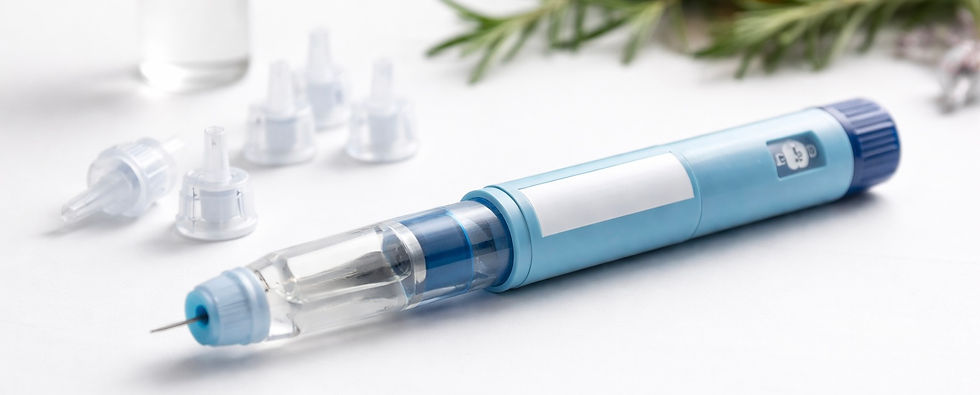
A Quick, Clear Breakdown: What GLP-1 Is
GLP-1 stands for glucagon-like peptide-1 — a hormone your gut naturally produces after you eat. Prescription medications that work on this pathway include Ozempic, Wegovy, Rybelsus, Mounjaro, Zepbound, Saxenda, Victoza, and Trulicity.
GLP-1 helps the body:
Signal fullness to the brain
Slow how quickly food leaves the stomach
Support insulin release
Regulate blood sugar
GLP-1 medications are synthetic versions of this hormone. They amplify those signals, which often leads to reduced appetite, slower digestion, improved blood sugar control, and weight loss.
In clinical trials, they’ve produced significant weight loss — often 15–20% on average — and in people with type 2 diabetes or cardiovascular risk, they’ve also been shown to reduce major cardiovascular events.
Risks, side effects, and why muscle matters
The most common side effects are digestive: nausea, vomiting, constipation, and diarrhea, especially when starting or increasing the dose. Less common but monitored concerns include gallbladder issues, pancreatitis, and a thyroid tumor warning based on animal data.
One of the biggest clinical concerns (especially long-term) is lean muscle loss if protein intake and strength training aren’t prioritized. Muscle is protective — it stabilizes blood sugar, improves insulin sensitivity, and keeps metabolism more resilient.
Prediabetes + stopping the medication
For people with prediabetes, GLP-1 medications can normalize glucose markers during treatment and reduce progression toward type 2 diabetes — largely through weight loss.
But they generally function as ongoing therapy. When stopped, appetite signals return, digestion normalizes, and many people regain a significant portion of the lost weight if metabolic foundations haven’t been strengthened.
Cost in Canada
In Canada, cost is a major factor. Without insurance, weight-loss dosing typically runs $400–$550+ per month, and public coverage is generally limited to diabetes — not weight loss or prediabetes alone.
Research links to the clinical trials mentioned above are provided at the end of this article if you’d like to review the data directly.

Let’s Go Deeper: Metabolic Stability Is Built, Not Forced
Herbs as nourishment, not overrides
Pharmaceutical appetite suppressants often push a single pathway. Herbs work differently. They support the body by strengthening systems — not forcing outcomes.
In practice, herbs can help:
Support key organs (liver, pancreas, adrenals)
Improve communication between systems (hormones, digestion, metabolism)
Increase adaptability to stress and daily demands
Provide trace minerals and plant compounds that support deeper function
Rather than commanding the body to eat less, herbs strengthen the foundations that regulate hunger, glucose handling, energy, and resilience.
Blood Sugar Balance Is a Whole-Body Process
Blood sugar regulation involves more than just glucose. It includes:
Pancreas (insulin signaling)
Liver (glycogen storage and release)
Adrenals (stress response and cortisol)
Muscle (glucose uptake)
Minerals (especially magnesium, chromium, zinc)
Digestive bitters can be a foundational tool
for blood sugar support because improving digestion often improves glucose handling.
When blood sugar swings become chronic, the body shifts into stress physiology:
cortisol rises
cravings increase
muscle breaks down
fat storage becomes easier
metabolism slows over time

The holistic goal is metabolic stability, not glucose suppression.
Herbs Traditionally Used for Glucose + Metabolic Support
Some classic herbal allies include:
Berberine (insulin sensitivity + post-meal glucose support + metabolic/lipid support)
Gymnema (pancreatic support, glucose balance)
Fenugreek (post-meal glucose support + digestion)
Cinnamon (insulin sensitivity + circulation tone)
Bitter melon (traditional glucose handling support)
Bilberry leaf (traditional glucose + vascular support)
Digestive bitters (gentian, dandelion root, artichoke, orange peel — support bile flow, digestive signaling, and post-meal glucose regulation)
Because blood sugar doesn’t happen in isolation, we also look at the supporting network:
Milk thistle (liver pathways that influence glucose + fats)
Dandelion root (digestion + bile + elimination)
Licorice (adrenal support; used carefully and strategically)
Ginseng (stamina, metabolic adaptability, resilience)
Why Muscle Preservation Changes Everything
Muscle tissue is not cosmetic — it’s metabolic.
Muscle:
increases glucose disposal
improves insulin sensitivity
supports resting metabolic rate
protects long-term metabolic health
Any weight loss approach that sacrifices lean tissue often backfires later.
That’s why sustainable metabolic support must include:
adequate protein
strength/resistance work
mineral sufficiency
digestive efficiency
stable sleep and recovery
Stress Resilience Is Not Optional
Blood sugar instability and weight resistance often trace back to chronic stress physiology.
Cortisol influences:
insulin resistance
abdominal fat storage
thyroid conversion
cravings
muscle breakdown
You can’t fully stabilize metabolism without stabilizing stress response.
That’s where adaptogens may fit, depending on the person:
Ashwagandha
Rhodiola
Eleuthero
(Always individualized — especially with thyroid patterns, anxiety patterns, blood pressure, and meds.)
Branch vs Root: Why “Take This for That” Often Fails
Think of symptoms like the branches of a tree.
Weight gain, fatigue, cravings, blood sugar swings, skin issues, menstrual symptoms — those are the branches. They’re real. They’re uncomfortable. They get our attention.
But the roots are often things like:
chronic stress
mineral depletion
digestive weakness
poor sleep
liver congestion
long-standing blood sugar instability
If you only trim branches, they grow back the same way. When you strengthen roots, the branches often change without being chased one by one.
This is why holistic care can offer symptom relief while still addressing the root — using herbs alongside food, minerals, movement, sleep, and stress support.

Individualized Care: Like Tailoring a Dress
Individualized care is like getting a dress tailored to your body. Off-the-rack is made for a general shape. Tailoring accounts for your proportions, your unique needs, and what actually fits you.
That’s what a personalized care plan looks like. It’s built around your history, your patterns, your digestion, your stress physiology, your goals — and your capacity.
I also don’t throw everything at you at once. Healing doesn’t work that way.
I take a step-by-step, layered approach:
start with the foundations
build what’s most essential first
adjust as your body responds
keep it manageable and sustainable
My Work Isn’t Just Herbs
Before becoming a clinical herbalist, I spent 25 years in the fitness industry — as a personal trainer, group exercise instructor, medical exercise specialist, sport specific trainer and gym owner.

I’ve worked hands-on with hundreds of bodies. I know how stagnation changes metabolism, how muscle protects blood sugar, and how movement is non-negotiable for long-term metabolic resilience.
That background shapes everything I do. My work supports the whole system — herbs, yes, but also strength, movement, nourishment, recovery, and real-world sustainability.
If this resonates — you can book a 1:1 consult on my website.
Prefer to check fit first? Email me a brief summary of your main concerns and I’ll set up a short call to confirm how I can help (or whether I’m the right practitioner for you).
Email: herbalarchitect@gmail.com
Research Links (for further reading)
STEP 1 Trial (2021, New England Journal of Medicine)
“Once-Weekly Semaglutide in Adults with Overweight or Obesity”
STEP 4 Trial – Withdrawal Study (2021, JAMA)
“Effect of Continued Weekly Subcutaneous Semaglutide vs Placebo on Weight Loss Maintenance”
SURMOUNT-1 Trial (2022, New England Journal of Medicine)
“Tirzepatide Once Weekly for the Treatment of Obesity”
LEADER Trial (2016, New England Journal of Medicine)
“Liraglutide and Cardiovascular Outcomes in Type 2 Diabetes”
SUSTAIN-6 Trial (2016, New England Journal of Medicine)
“Semaglutide and Cardiovascular Outcomes in Patients with Type 2 Diabetes”
SELECT Trial (2023, New England Journal of Medicine)
“Semaglutide and Cardiovascular Outcomes in Obesity without Diabetes”


Comments