
The Architecture of Your Plate

We hear so much about what we should and shouldn’t eat.
More protein.
More fibre.
Less sugar.
More plants.
Healthy fats.
Anti-inflammatory foods.
But instead of looking at each one separately, I think it helps to step back and look at the architecture of your plate.
What is actually on it?
And what is missing?
Food is information. The body responds to the type of food we eat, the amount, the variety, how it was prepared, and how consistently we give it those inputs.
I think of this almost like the Three Bears.
Too little.
Too much.
Or just right.
The same applies to food and movement. We need the right input, in the right dose, regularly enough for the body to respond.
So What Is the Architecture of Your Plate?
For me, it comes down to three main things:
1. Enough protein
2. A variety of fibre
3. Anti-inflammatory protective plant compounds
And these categories overlap.
Lentils give you protein and fibre.
Avocado gives you fibre and healthy fat.
Nuts and seeds give you protein, fibre and healthy fats.
Herbs and spices give you a concentrated source of protective plant compounds.
You don’t have to make food complicated. But you do want the different parts of the meal to work together.
But First — Where Did Your Food Come From?
We have all heard the saying:
You are what you eat.
But I think we need to take that a little further.
You are what you eat — and what what you eat, eats.
Where our food comes from matters.
For plant foods, that means thinking about the soil, growing conditions, freshness, seasonality and how much processing happened before the food reached us.
For animal foods, it also means asking what that animal ate and how it was raised.
Food doesn’t begin at the grocery store.
It begins with the soil, seed, water, sunlight, feed, farming practices and environment long before it reaches our kitchens.
This doesn’t mean every piece of food has to be perfect, organic or expensive.
It simply means the quality of the input begins before the plate.
1. Where Is the Protein?
Protein becomes increasingly important as we age.
We need amino acids for muscle, repair, strength, satiety and healthy aging.
And as we get older, we need to think a little more intentionally about giving muscle enough of a stimulus. Exercise provides one stimulus.
Protein provides another.
That doesn’t mean everyone needs to live on protein shakes.
It means asking:
Where is the meaningful protein source in this meal?
Beans, lentils, chickpeas, peas, soy, nuts, seeds, eggs, dairy, fish, poultry and meat can all have a place depending on how you eat.
I also like the idea of mixing your protein sources.
Different foods give us different proportions of amino acids.
Traditional food cultures have done this beautifully for generations.
Pulses with grains.
Beans with seeds.
Lentils with rice.
Soy prepared as tofu or tempeh.
The combinations are endless.
2. Where Is the Variety of Fibre?
Not just:
“Did I eat fibre today?”
But:
“How many different plant foods did I eat?”
Different plants give us different kinds of fibre and different substrates for the organisms living in our gut.
That is why variety matters.
Vegetables.
Fruit.
Beans.
Lentils.
Whole grains.
Nuts.
Seeds.
Avocado.
Herbs.
Fermented vegetables.
And again, foods overlap.
Avocado gives us fibre and healthy fat.
Pulses give us fibre and protein.
Nuts and seeds give us fibre, protein and fat.
It isn’t necessarily about eating huge amounts of one fibre.
It is about variety and the right amount, every day.
3. Where Are the Anti-Inflammatory Protective Plant Molecules?
This is where colour, herbs, spices and aromatics really matter.
Turmeric.
Garlic.
Onions.
Leeks.
Ginger.
Berries.
Cruciferous vegetables.
Leafy greens.
Fresh herbs.
Extra-virgin olive oil.
Plants contain thousands of biologically active compounds.
Turmeric gives us curcuminoids.
Alliums such as garlic and onions contain organosulfur compounds.
Berries provide anthocyanins.
Cruciferous vegetables contain glucosinolates.
Herbs, spices, olives and colourful plants provide a wide range of polyphenols.
We often call these anti-inflammatory foods, because that is a term people understand.
But these compounds do much more than simply “reduce inflammation.”
They interact with many pathways in the body.
That is why I want herbs and spices on the plate, not only in the medicine cabinet.

The Basic Plate Architecture
So when you look at your meal, ask:
Where is the protein?
Where is the variety of fibre?
Where are the anti-inflammatory protective plant compounds?
That is your basic architecture.
Healthy fats such as avocado, nuts, seeds and extra-virgin olive oil naturally weave through all three.
Traditional Cuisine Gets a Lot of This Right
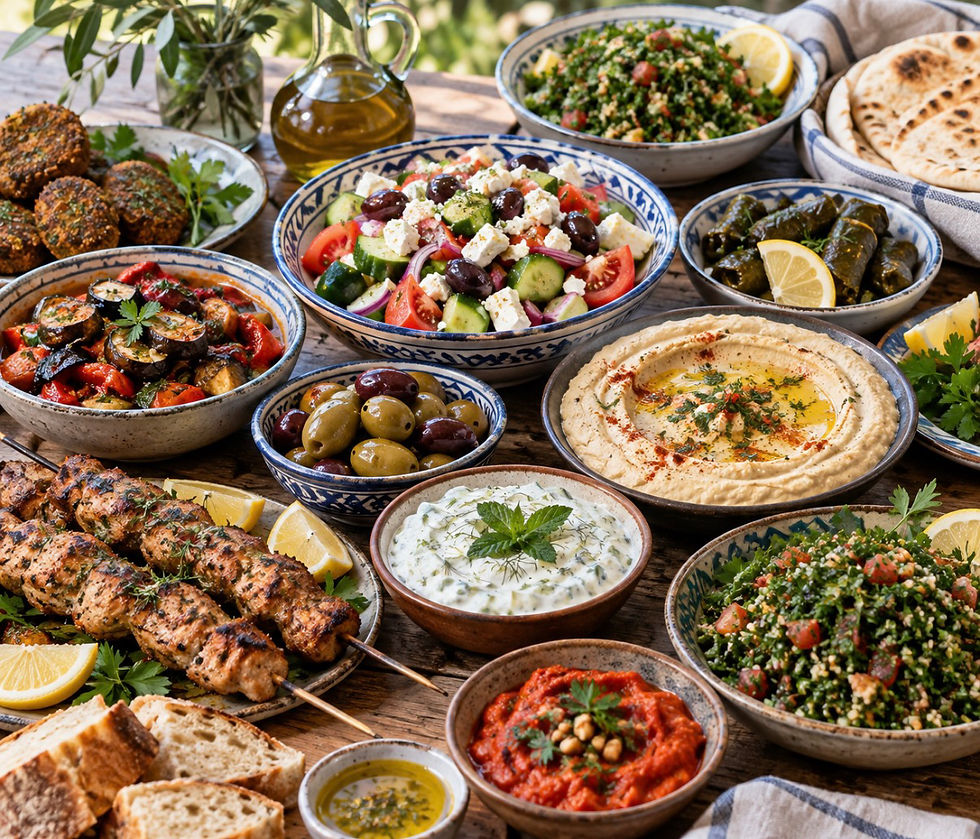
I am increasingly interested in how traditional cuisines put food together.
Not another diet.
Not another rigid list.
But actual cuisine.
Across cultures, you repeatedly see combinations of:
Pulses.
Grains.
Vegetables.
Herbs.
Spices.
Nuts.
Seeds.
Ferments.
Pickles.
Healthy fats.
And animal foods where they traditionally fit.
These meals often have far more architecture than a lot of modern convenience food.

And traditional cuisine teaches us something else that I think we have forgotten:
Preparation Matters
It isn’t only what we eat.
It is also what we do to food before we eat it.
Soaking.
Grinding.
Sprouting.
Fermenting.
Cooking.
Sometimes lightly toasting.
These processes change food.
Soaking beans, pulses and grains hydrates them and can reduce compounds such as phytate.
Grinding breaks down the physical structure of seeds, grains and pulses.
Cooking softens plant material and makes many foods easier to digest.
Fermentation allows microorganisms to begin transforming the food before we eat it.
Sprouting begins the seed’s own germination process.
Think about foods like:
Tempeh.
Miso.
Sourdough.
Dosa.
Lentil pancakes.
Chickpea pancakes.
Fermented vegetables.
Ground flax.
Tahini.
Traditional food preparation can often make a food easier to digest or change the availability of certain nutrients.
So I think of it this way:
Plate Architecture is what you eat.
Food source is where it came from.
Traditional preparation is what happened to it before you ate it.
And Then There Is Breakfast
Breakfast is one of the easiest places to see the difference.
A lot of modern breakfasts are mainly carbohydrate.
Toast.
Cereal.
Pastries.
Or something grabbed quickly on the way out the door.
Instead, look at breakfast through the same architecture.
Where is the protein?
Where is the fibre?
Where are the plants, herbs and spices?
A breakfast higher in protein and fibre can help with satiety and appetite regulation through the day.
And breakfast does not have to look like bacon and eggs or a protein shake.
This is where I love looking at traditional Indian breakfasts.
Dal.
Sambar.
Lentils.
Chickpeas.
Besan pancakes.
Dosa.
Vegetables.
Seeds.
Herbs.
Spices.
Imagine a pancake made from soaked and ground pulses or grains, cooked with herbs and spices, and topped with vegetables, avocado or something fermented.
Now you have:
Protein.
Different fibres.
Healthy fat.
Anti-inflammatory plant compounds.
Compare that with one piece of toast on its own.
It isn’t only about calories.
The architecture is different.
And the nutritional input is different.
Prime Digestion
There is another part of traditional eating that I love. Sometimes the meal starts before the main plate.
Bitters.
Pickles.
Fermented vegetables.
Sour flavours.
Aromatic herbs and spices.
Bitters can help stimulate digestive signalling and digestive secretions.
Fermented foods have already been transformed by microorganisms before we eat them.
And herbs and spices such as ginger, fennel, cumin, coriander, cardamom and mint have traditionally been used around meals for digestion. They are slightly cooked to bring out the aromatics.
I think of this as:
Bitter + sour + aromatic = preparing the digestive system for food.
It Doesn’t Have to Be Perfect
The point of Plate Architecture is not to create another set of food rules.
It is to give you a simple way to look at your meals.
What is the source?
Where is the protein?
Where is the fibre diversity?
Where are the herbs, spices, colours and anti-inflammatory plant compounds?
How was the food prepared?
And am I giving my body the right amount of these inputs often enough?
Like Goldilocks:
Not too little.
Not too much.
Just right.
Right source.
Right input.
Right dose.
Right preparation.
Daily.
That, to me, is The Architecture of Your Plate.
Online consultations available:
Love & Sunshine, Tricia


Comments